Lo Contador Gallery
It is an exhibition space specifically designed to promote the fields of design, architecture, and the city in Santiago from an academic and pedagogical perspective. In this way, the gallery’s proposal complements and adds complexity to the network of cultural spaces through a specialized focus on themes that allow us to reflect on, experiment with, and interpret innovative proposals related to the creative disciplines that bring us together, which are also relevant to society.
The gallery is a space that strengthens and positions the Lo Contador campus as a catalytic cultural venue, based on a concept that favors education and knowledge, dynamically and interdisciplinarily bringing together creative disciplines through the logic of exhibition assembly. In this way, we promote not only education and culture, but also the constant interaction between academia and the environment, from exhibition perspectives that arise from creative curiosity.
The Lo Contador Gallery project falls under the FADEU – UC Dean’s Office, led by Dean Magdalena Vicuña Del Río. The director of the Lo Contador Gallery is Gloria Saravia Ortiz, an academic from the School of Architecture.
Objectives of the Lo Contador Gallery
The objective is to create a cultural space that strengthens the interdisciplinary dynamics of the Faculty through the exhibition format in its broadest sense, utilizing physical and virtual platforms to influence the social environment.
Specific Objectives
Ser una plataforma interdisciplinaria de experimentación, crítica y visión de futuro.
Ser una plataforma de reunión de diversos actores desde la academia, la empresa y el barrio.
Ser una plataforma de educación alternativa y complementaria para nuestros estudiantes.
Ser una plataforma de convergencia nacional e internacional, a través de la cual la comunidad académica establece diálogos y vínculos estrechos con temáticas innovadoras y contingentes, que complementan los ejes de conocimiento propios de nuestra facultad.
History
The Lo Contador Gallery has been directed since mid-2024 by Gloria Saravia Ortiz, an academic from the School of Architecture, and currently reports to the FADEU-UC Dean’s Office under Dean Magdalena Vicuña Del Río.
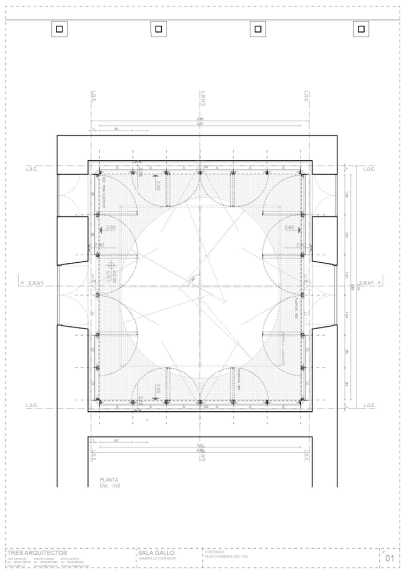
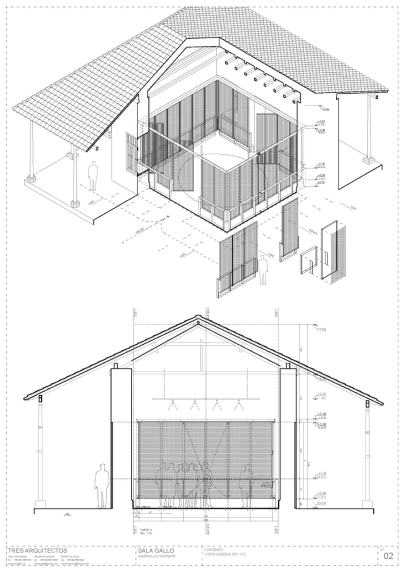
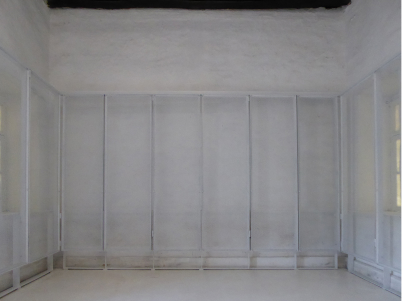
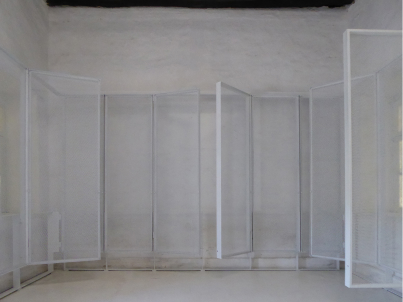
Its history dates back to 2015, during the deanship of Mario Ubilla Sanz, a professor at the School of Design and former FADEU-UC dean. He proposed restoring the Cuarto Rojo Gallery, which was formerly located in the Casona Lo Contador, next to the entrance hall. In spatial terms, the proposal focused on remodeling an internal space of the Campus, part of the Casona, which included the rehabilitation of the last room of the lateral gallery—which was then disused—facing our faculty’s renowned ‘Patio de Madera’. This was done with the idea of creating a center of public attraction that could open onto the courtyard, thereby generating significant cultural instances around the exhibition initiatives to be carried out.
The remodeling (2021) of the room was based on a project won through an internal competition by UC architects Juan Ramón Samaniego, María Emilia Lavanchy, and Benjamín Lezaeta, with consultancy from academics Umberto Bonomo and Douglas Leonard.
Between 2022 and mid-2023, six exhibitions were held under the direction of professors Patricio Pozo (School of Design) and Macarena Cortés (School of Architecture). From late 2023 until mid-2024, the direction of the gallery was held by the former Director of Outreach and Communications at FADEU-UC, Macarena Cortés. As of June 2024, the direction of the Lo Contador Gallery is led by Gloria Saravia Ortiz, a professor at the School of Architecture and director of the FADEU WiP exhibition project.
Image Gallery
Team
No se encontraron personas para este tipo de Area.Exposiciones anteriores
Ver más exposicionesGalería Lo Contador (campus Lo Contador UC)
Lo Contador
Lo Contador
Lo Contador
Campus Lo Contador
2025 TOUR ‘Collection’
[2025 Presentation]:
The possibility of creating and bringing a work into existence from multiple parts, from the summation of a process over time, or from the need to explain an idea through more than one object, points toward the sense of a collection.
A collection, however, while composed of parts, always alludes to the whole when its specificity is established: a ‘corpus’ that tells a story or proposes a narrative from multiple perspectives gathered in a grand gesture. It is from this perspective that the Lo Contador Gallery presents the 2025 tour, reflected in four valuable exhibitions.
Gloria Saravia – Director of Lo Contador Gallery
[2025 Exhibitions]:
Exhibition 1 – MARCH
Exhibition: “The Place of the Museum”
Exhibitor: Constanza Gaggero
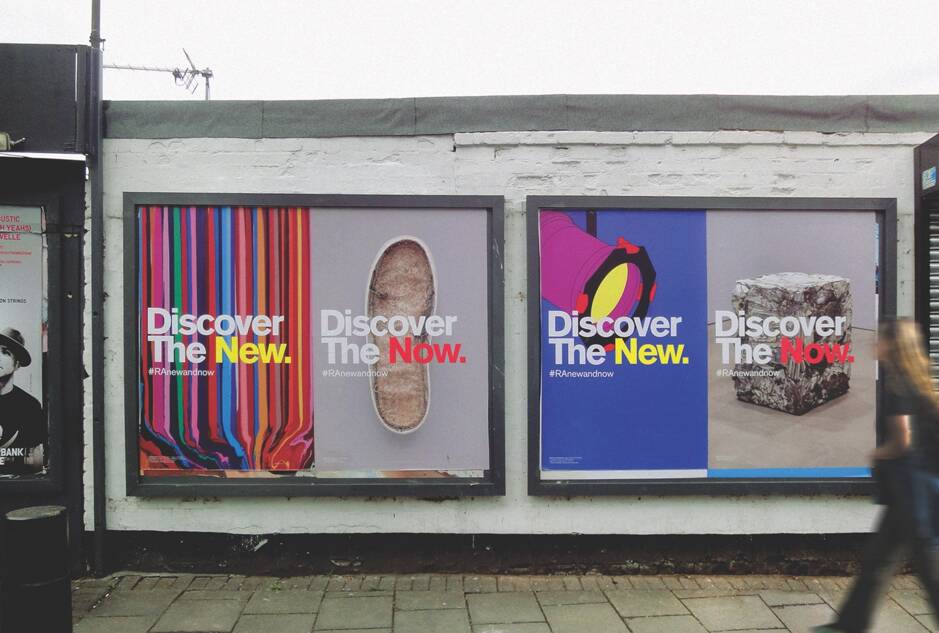
The exhibition The Place of the Museum does not answer the question of what a Museum is, but rather investigates where it is. This shift or detour is useful for explaining the practice of Gaggero, who has managed to push that question through her years of practice working with cultural institutions in Europe and South America. Works, references, readings, and a provisional taxonomy revitalize the discussion on the role of the archive, creativity, the collection, and what space the Museum occupies within the discipline of design.
Exhibition 2 – MAY
Exhibition: “In-Between”
Curators: Emilio De La Cerda, Rodrigo Jorquiera, Felipe Jullian, Paulette Sirner, Francisco Chateau
The exhibition will consist of two videos of approximately 10 minutes each. The first portrays biographical facts of Guillermo Jullian prior to his return to Chile, while the second shows him working on the development of a project, featuring phrases and quotes related to his work method.
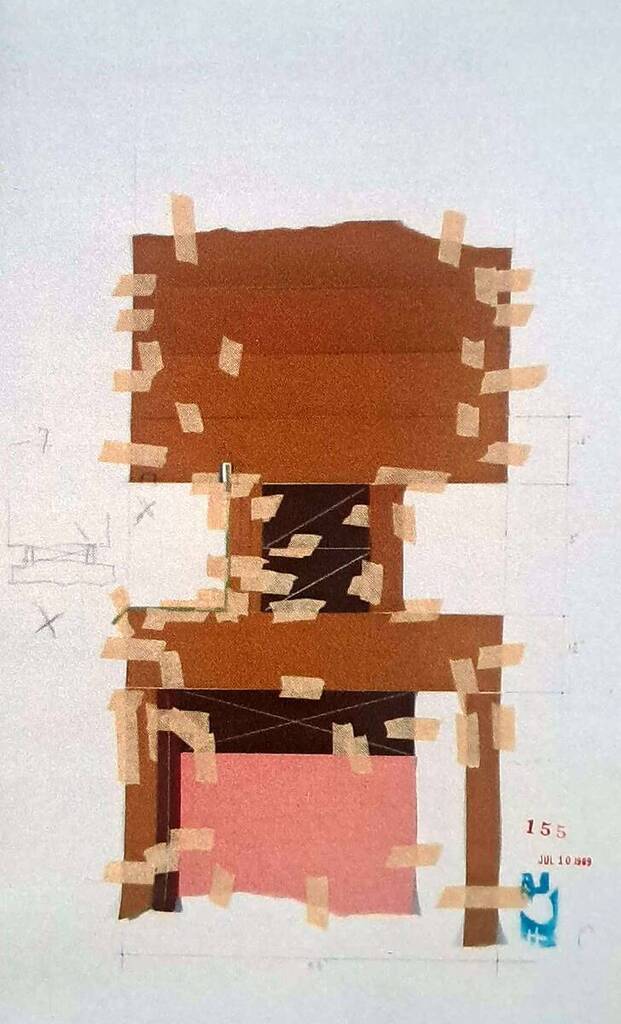
Additionally, a selection of drawings and collages referencing his design process is presented, composed of references from previous projects and his own design process known as YPD (Yellow Peripheral Distinction).
Exhibition 3 – AUGUST
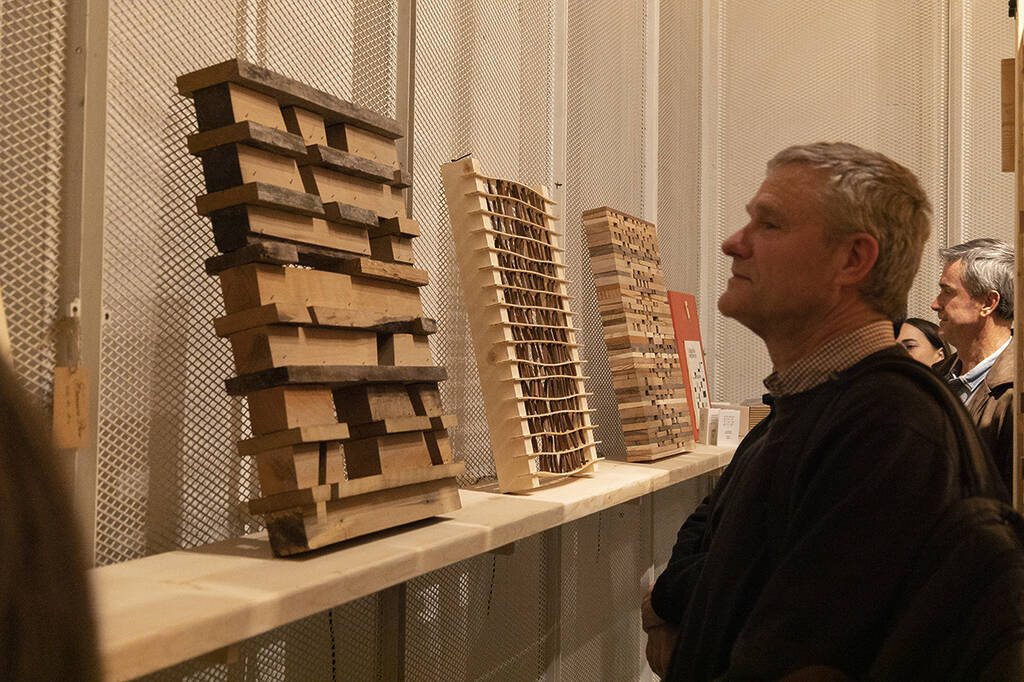
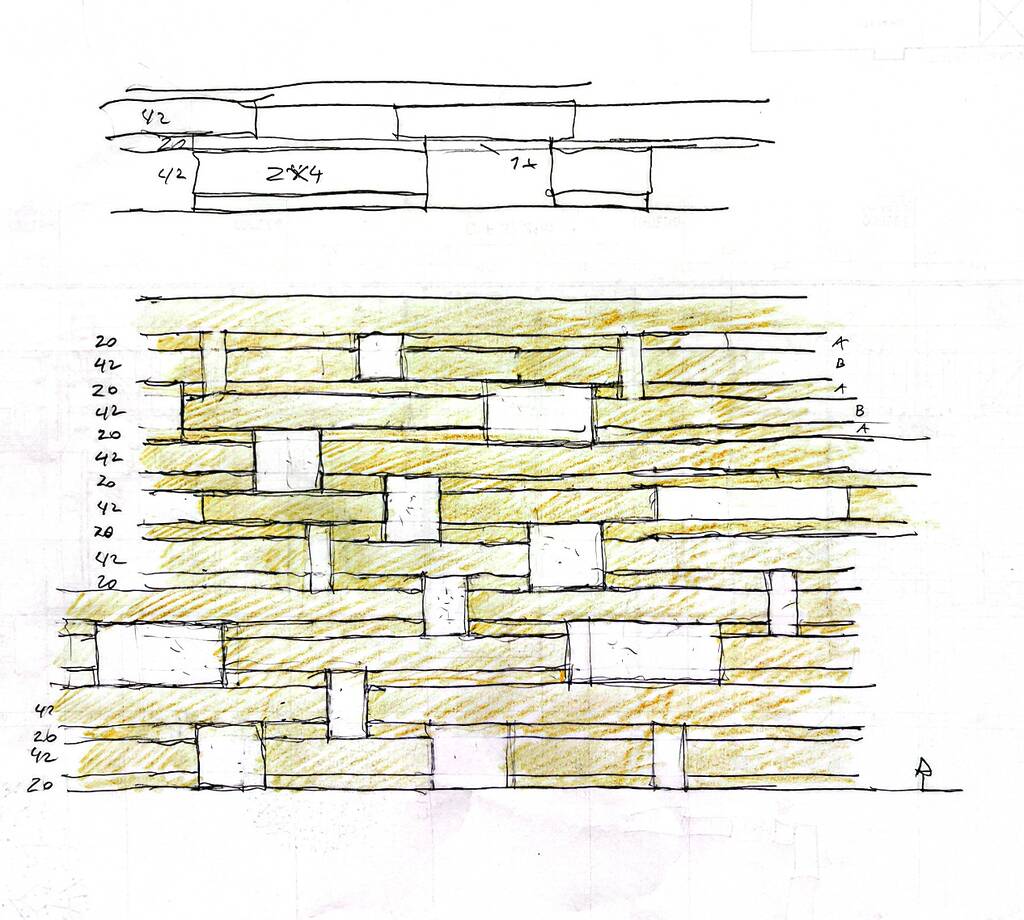
Exhibition: “Carpentry Calligraphies: Order and Variation”
Curator: Martín Hurtado
The concept of “carpentry calligraphies” refers to a style of architectural design and creation inspired by the aesthetics of carpentry and artisanal woodwork, which involves joining discontinuous pieces and parts to achieve a unified body. This technique highlights the use of lines and geometric shapes that articulate joints, series, and rhythms typical of carpentry to build a unified language with a sense of solidity and precision. Order and variation:
1. Order: In carpentry calligraphies, order is established through a clear geometric structure that identifies two elements: a load-bearing skeleton and a finishing envelope. The regularity of the skeleton provides visual and structural stability, following proven wood assembly patterns. The continuity of the envelope constitutes the skin, the mantle that unifies and defines the limit of the form, allowing attentive observation by the brain to read, understand, and validate it.
2. Variation: Variation is introduced through changes in structural details, reminiscent of the individuality of each piece in an artisanal work. Variation allows the design to maintain a personal and unique style, evoking the authenticity of handmade work.
Carpentry calligraphies thus become a distinctive hallmark that differentiates the architectural language and plastic sensitivity of various architects working with wood. Measuring, translating, constructing, and displaying these patterns will serve as a pedagogical tool for an exhibition within a university gallery, rescuing a traditional craft while maintaining a balance between geometric order and the visual variability that makes each design unique.
Exhibition 4 – OCTOBER
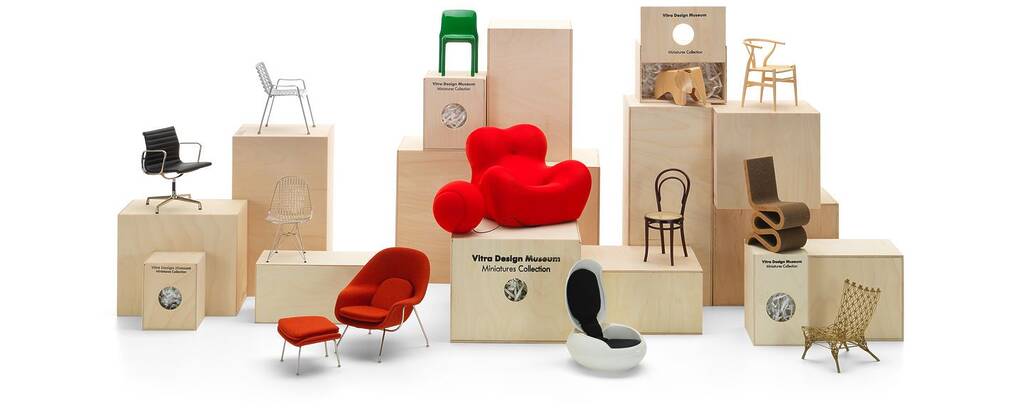
Exhibition: “Architecture+Design at Vitra and USM”
Curator: Ramón Valdés
The exhibition showcases the Vitra Campus and its constituent architecture, as well as the USM factory and its architect Fritz Heller. It will also display panels with photographs of world-renowned architects and designers who develop projects for these leading companies, such as Eames, Girard, Noguchi, Prouvé, Foster, Gehry, Nelson, Meda, Morrison, Panton, Citterio, and the Bouroullec brothers. Alongside this, the collection of furniture and chair miniatures from the Vitra Design Museum will be presented.
Exhibition 5 – DECEMBER
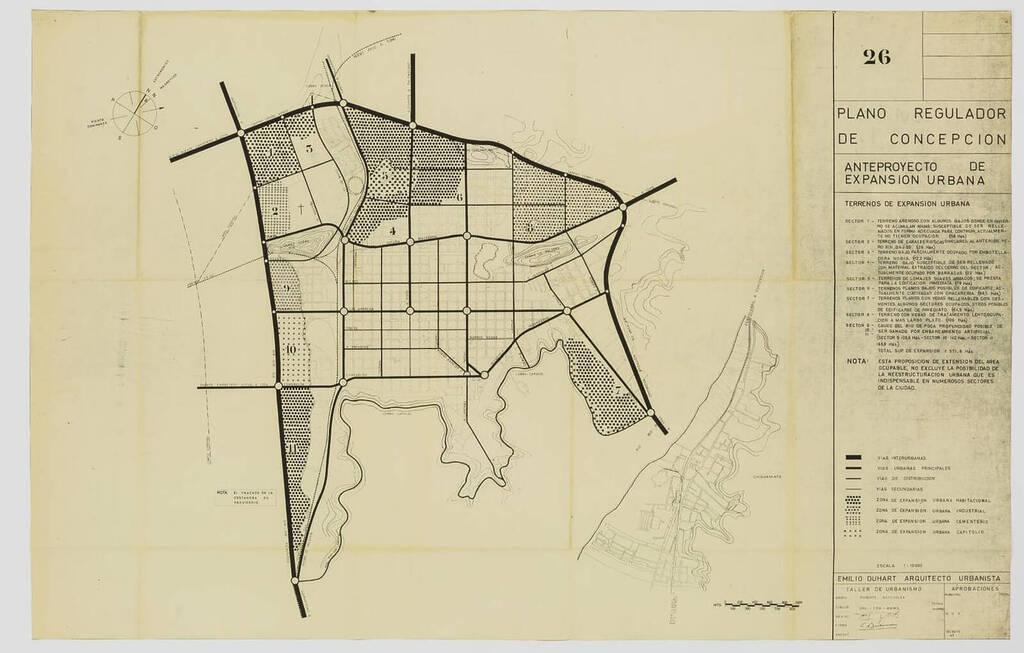
Exhibition: “Emilio Duhart, Concepción Regulatory Plan 1960: Updating an Urban Model Between Two Earthquakes.”
Curators: Pablo Guzmán, IEUT-PUC – Valentina Cortés, IEUT-PUC – Isabel García, FADEU-PUC – Cristián Berríos, U. Biobío – Sergio Baeriswyl, U. Biobío.
The 1960 Concepción Regulatory Plan, developed by Emilio Duhart, represented an update and modernization of the urban model implemented after the 1939 earthquake. While the latter laid the foundations for reconstruction, the city’s expansion and transformation demanded new planning in line with modern urbanism principles. During the plan’s development, Concepción was struck again by the 1960 earthquake, testing the project’s resilience and adaptability. This exhibition analyzes how the 1960 Regulatory Plan responded to the urban challenges of the time, its link to natural disasters, and its impact on the configuration of the city today.
2026 TOUR ‘Possible Futures’
[Presentation]:
Exploring the capacity to intertwine memory and anticipation, showing how creativity opens alternative paths in the face of present challenges, is the premise of the Lo Contador Gallery’s 2026 tour. Questioning the future—from the perspectives of architecture, design, art, and urban studies—implies defining paths that include both current works and historical pieces which, when reviewed today, reveal their strength as visions of a future yet to be built. The idea of possible futures is thus conceived as a collective laboratory where past, present, and will meet to test different ways of inhabiting what is to come.
Gloria Saravia – Director of Lo Contador Gallery
[2026 Exhibitions]:
Exhibition 1 – March 11 to April 30
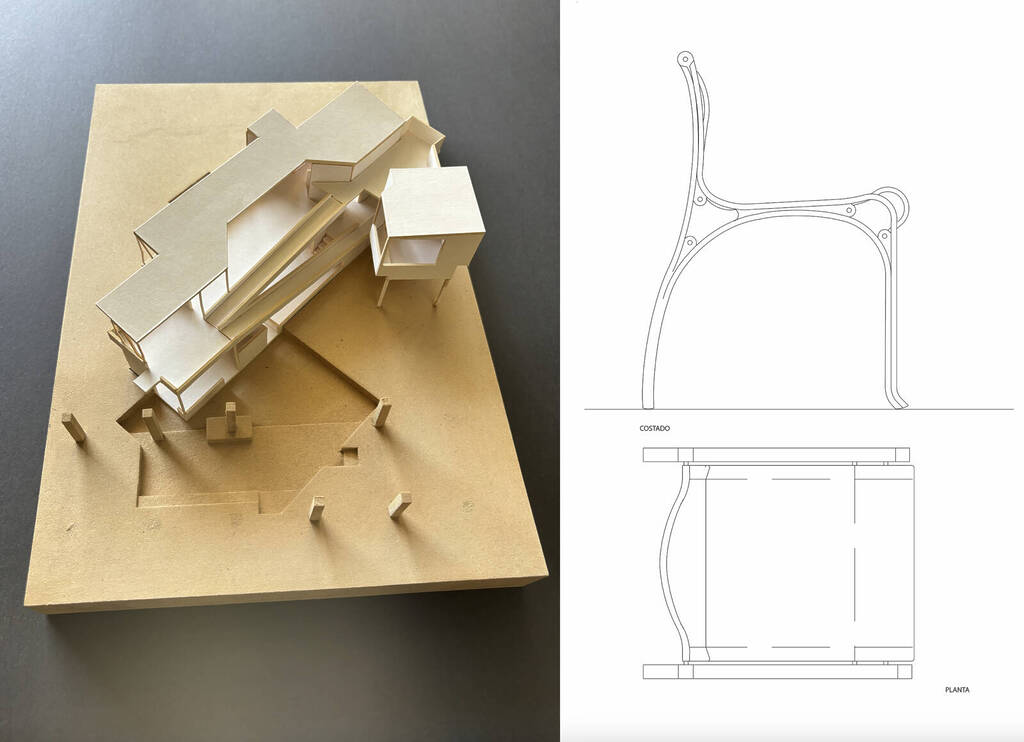
Exhibition: “CRISTIÁN VALDÉS. Vital Work”
Curator: Sandra Iturriaga
The exhibition will consist of a selection of works by architect Cristián Valdés Eguiguren, 2008 National Architecture Prize winner, who over six decades of practice has developed an exemplary and consistent career, far from conventions, establishing a genuine and vital dialogue between the work, the material, and the place. This selection of works is presented through a set of photographs, drawings, and models generated as part of research conducted under the UC School of Architecture. Additionally, the exhibition includes a multimedia production created from conversations and interviews with the architect, aiming to provide first-hand evidence of the principles that guide his craft and work.
Sandra Iturriaga Biography: Architect from the Catholic University of Chile, Master in Architecture from the Escola Tècnica Superior d’Arquitectura de Barcelona, and PhD in Architecture and Urban Studies from UC. Director of Mapocho 42K Lab, an applied research laboratory that, together with a multidisciplinary team, develops urban and landscape projects which have been awarded in competitions and biennials. Since 1997, she has been a professor at the School of Architecture of the Catholic University of Chile, authoring multiple research projects and publications, including “Cristián Valdés. The Measure of Architecture”.
Exhibition 2 – May 20 to July 10
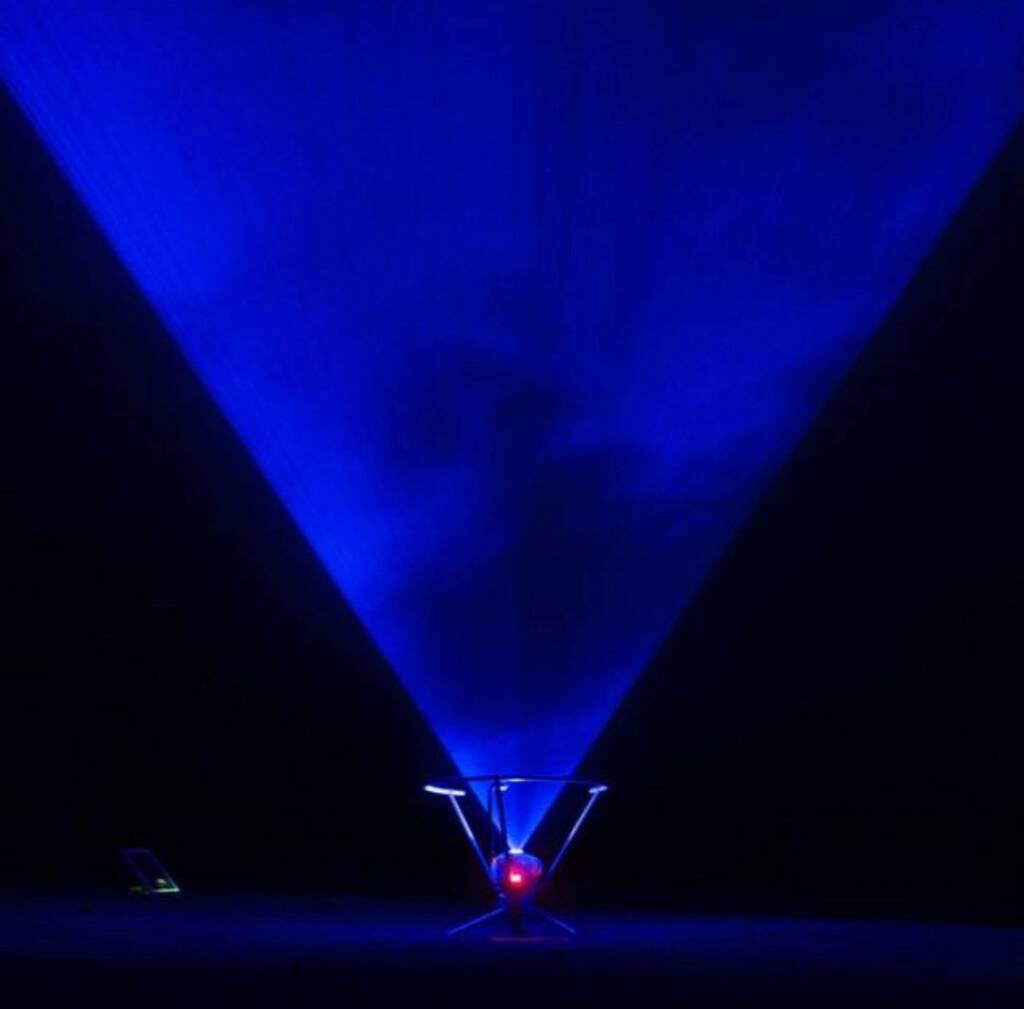
Exhibition: “Aeromancy: or how to cut a cloud”
Curators: Alejandra Bosch and Pablo Alfaro
The exhibition presents a retrospective of the fog scanning project led by Mauricio Lacrampette and developed between 2019 and 2025 in the Alto Patache Fog Oasis. The journey begins with the first experiments of the KMNCHK ScanLab and culminates with the construction of ObsLam, the world’s first laminar fog observatory. During these years, the project has explored the possibility of perceiving and recording the hidden geometry of the air, investigating fog as matter, atmospheric entity, and perceptual limit.
The exhibition brings together a video combining audiovisual records of the process with technical drawings of the artifacts built for the research, accompanied by sound design and an original soundtrack composed specifically for the project since its inception. In dialogue with this living archive, fog scans—the project’s initial goal—are displayed, bringing fragments of a landscape revealed only through technological mediations deployed in various expeditions into the exhibition space. Between the visual, the sonic, the technological, and the atmospheric, the exhibition proposes an expanded reading of the invisible and the ephemeral in contemporary ecosystems.
Curators’ Biography: Pablo Alfaro Vial. UC Architect, Master of Landscape Architecture from the University of California, Berkeley. Since 2008, he has collaborated with several national and international landscape architecture firms. He currently works designing large-scale landscape projects in both China and Saudi Arabia in collaboration with Ned Kahn Studios and TLS Landscape Architecture. In 2018, he founded LANDMRX_ with Kushal Lachhwani, an independent practice dedicated to landscape project design at the intersection of art, ecology, and technology. Pablo is a professor in the Master of Landscape Architecture program at the Pontifical Catholic University of Chile (MAPA UC) and the Design Lab UAI.
Alejandra Bosch Kreis. UC Architect and Master of Arts from the Landscape Urbanism Programme at the Architectural Association. After collaborating with firms such as Aecom and Groundlab, in 2009 she founded Lyon Bosch Arquitectos with Arturo Lyon, developing architecture, urban design, and public space projects. In 2016, Danilo Martic joined as a partner, developing projects such as Nueva Alameda Providencia, the landscaping of the International Antarctic Center, and the New Plaza Baquedano. She is an assistant professor at the UC School of Architecture and, since 2022, head of the Master of Landscape Architecture program. Her work investigates the landscape as a catalyst for ecological and social relationships.
Exhibition 3 – August 12 to October 9
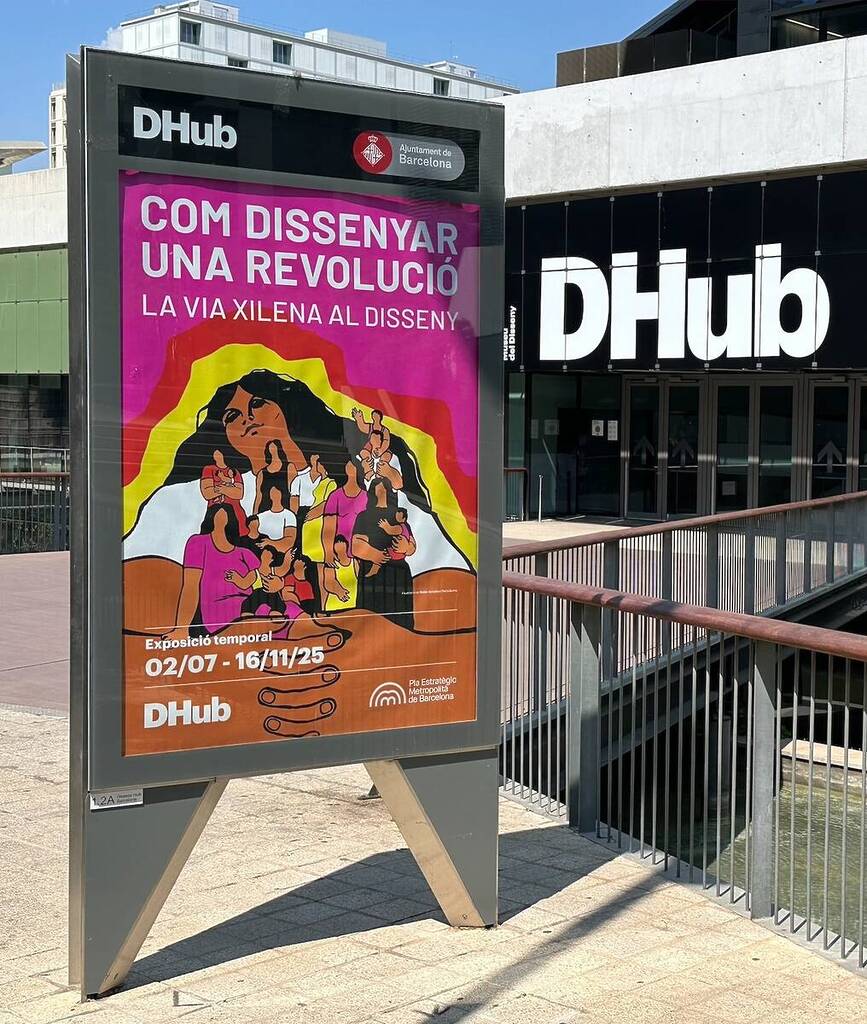
Exhibition: “How to Design a Revolution. Impact of a UC-MIT Project”
Curators: Hugo Palmarola, Eden Medina, Pedro Ignacio Alonso
The exhibition “How to Design a Revolution. Impact of a UC-MIT Project” at Lo Contador Gallery will present the trajectory, impact, and local and international influence of the curatorial project for the exhibition “How to Design a Revolution: The Chilean Road to Design.” This exhibition focuses on graphic and industrial design during Salvador Allende’s government in Chile, an exceptional case in the history of global design.
The exhibition was conceived from the interdisciplinary research and creation work of UC and MIT professors. It opened at the Centro Cultural La Moneda in 2023-2024 and will tour the Disseny Hub in Barcelona in 2025 and Germany in 2026-2027. It is composed of design pieces that aimed for the democratization of reading and music, the reduction of technological dependence, and the overcoming of childhood malnutrition, among others.
One of the most prominent pieces in the exhibition is the first comprehensive and functional reconstruction of the Cybersyn operations room, a milestone in the history of cybernetics. The exhibition book, in Spanish and English versions, was published by the Swiss publisher Lars Müller Publishers in 2024.
Curators’ Biography: Hugo Palmarola, Eden Medina, Pedro Ignacio Alonso, curators of the exhibition “How to Design a Revolution: The Chilean Road to Design” at CCLM (2023-2024) and DHub Barcelona (2025); they carried out the first reconstruction of the Cybersyn operations room; published the book How to Design a Revolution: The Chilean Road to Design (Lars Müller Publishers, 2024); and obtained the MIT International Science & Technology Initiatives fund (2021-2023).
Hugo Palmarola holds a PhD in Latin American Studies from UNAM, with research awarded by the Design History Society. He won the Silver Lion at the Venice Architecture Biennale for the Chile Pavilion, together with Pedro Alonso (2014). He is a Professor of Design at UC and editor of the Latin American Design collection, with Renata Leitao, at Bloomsbury Publishing.
Eden Medina is a PhD from MIT and director of the MIT Program in Science, Technology, and Society. She is the author of Cybernetic Revolutionaries (MIT Press, 2011), a book that won the Edelstein and Computer History Museum prizes.
Pedro Ignacio Alonso holds a PhD from the Architectural Association and is the director of the UC Doctoral Program in Architecture, Design, and Urban Studies. He won the Silver Lion at the Venice Architecture Biennale for the Chile Pavilion, together with Hugo Palmarola (2014). He is the author of The Additional Element in Architecture, with Paulina Bitran (MIT Press, 2025).
Exhibition 4 – October 28 to December 28
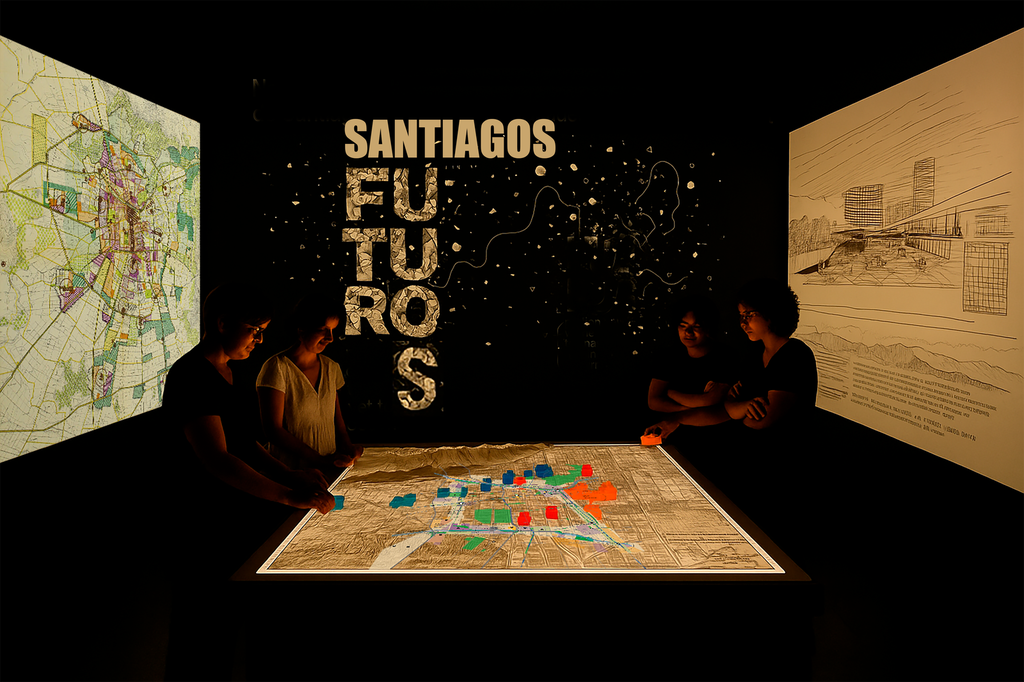
Exhibition: FUTURE SANTIAGOS. Narratives of the bioregional future and the perspectives of Emilio Duhart.
Curators: Roberto Moris, Tomás Vivanco, Pablo Guzmán, Maximiliano Contreras
This experimental exhibition invites exploration of prospective visions of Santiago through a dialogue between the pioneering proposals of Emilio Duhart and his 1957 students, and contemporary perspectives on bioregional development. The exhibition is configured as a living laboratory for the collective construction of territorial imaginaries that articulates design memory, present realities, and possible futures to generate new narratives about Santiago as an integrated ecological and social system.
The heart of this immersive experience is a central interactive cube located within a dark cubic space with overhead projections, where visitors actively participate in building visions of how Santiago should relate to its territory. Their urban and rural proposals are recorded and incorporated weekly, transforming the exhibition into an evolving collective construction. The exhibition recovers the 1957 Greater Santiago Seminar and its links to the 1960 Inter-communal Regulatory Plan as a methodological precedent for addressing the current challenges of Santiago 2050 and the update of the Metropolitan Regulatory Plan.
Curators’ Biography: The curatorial team brings together multidisciplinary expertise in territorial planning, speculative design, and urban management under the umbrella of the Research Nucleus in Generation, Regeneration, and Resilience (GENURBIS). Its members belong to the three units of the Faculty and will have the collaboration of the FADEU Originals Archive.
Roberto Moris, UC Architect with an MSc in City Design and Social Science (LSE) and a PhD in Civil Engineering (University of Granada), is an Associate Professor at IEUT and the School of Architecture and Director of CEROLABS UC. An expert in integrated planning and resilience, he specializes in urban decision tools that integrate narrative technologies and strategic management for uncertainty.
Tomás Vivanco, UVM Architect with a Master’s in Advanced Design (ELISAVA) and Advanced Architecture (IAAC), PhD candidate in Architecture, Digital Futures (Tongji University), is an Assistant Professor of Design at UC and Director of Fab Lab Austral UC. He specializes in speculative design, futures, and distributed manufacturing.
Pablo Guzmán, Architect and Master in Urbanism (UCh), is an Associate Professor at IEUT specializing in urban planning, urban law, and territorial ordering. His academic career focuses on urban regulation and territorial management.
Maximiliano Contreras, PUC Designer and adjunct instructor in UC Design and UC Engineering, specialist in product design, strategic design, and material processes. As a consultant in digital innovation and founder of the design agency Di+, he brings experience at the intersection of design, technology, and entrepreneurship.
Opening Hours
Monday to Friday, 10:00 AM to 6:00 PM
Saturdays, 10:00 AM to 1:30 PM

