Research


Center for Sustainable Urban Development CEDEUS
The Center for Sustainable Urban Development (CEDEUS) is a research center that brings together the Universidad de Concepción and the UC, as well as the University of Columbia in the US, promoting projects and discussions about the country’s cities and their sustainable development processes. Its main objective is to understand urban dynamics, instruments, and decision-making processes that enable equitable and sustained improvements in people’s quality of life, through recognition of the biophysical limits and social demands of Chilean cities.

UC Atacama Desert Center – CDA
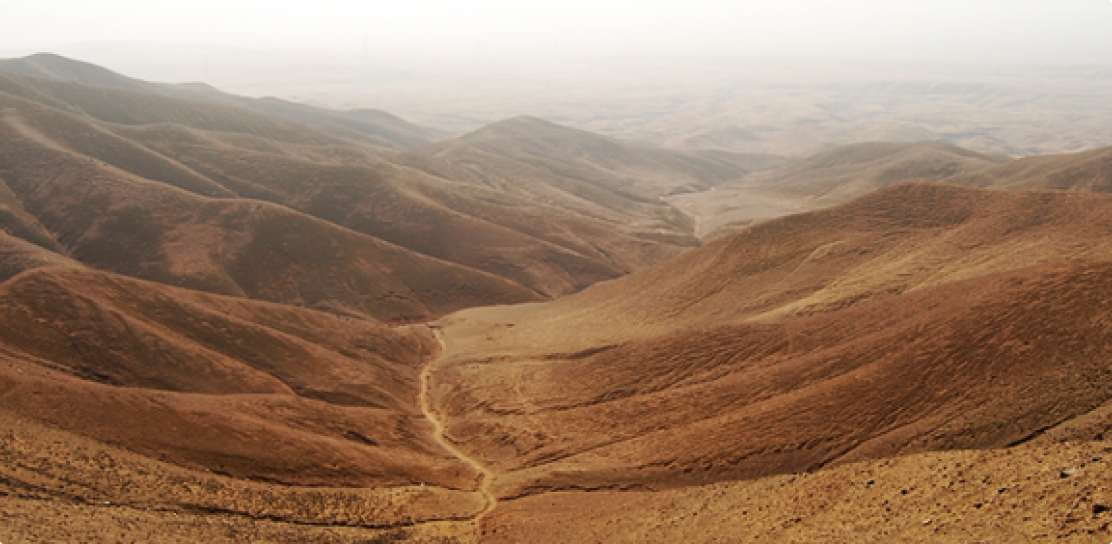
The Atacama Desert Center (CDA) was created in August 2006 with the objective of promoting research in the fields of architectural, urban, and landscape design, subject to the various constraints offered by the arid context of the Atacama Desert, from a multiple and interdisciplinary approach that expands the idea of the project toward areas of knowledge contained in the CDA structure.


UC Center for Innovation in Wood CIM UC
The Center for Innovation in Wood (CIM) was established as an interdisciplinary innovation hub through a partnership between the Pontificia Universidad Católica de Chile (UC) and the Chilean Wood Corporation (CORMA). The center aims to advance Chile’s potential as a forestry nation by promoting wood as a versatile, ecological, technological, durable, and high-quality material.

UC Center for Public Policy – CPP UC
The mission of the Center for Public Policy (CPP) is to contribute to the country’s development by linking UC’s academic work with the main challenges of society. The center seeks to contribute through proposals and solutions that are politically, socially, and economically sustainable, aiming to influence the public policy formulation process by generating opinion, evidence, and studies on matters of public interest, and working collaboratively to bring different actors in society together.


Cities Observatory (OCUC)
The Cities Observatory (OCUC) aims to consolidate itself as an applied research center for urban and territorial studies, establishing, at the level of the Faculty of Architecture, Design, and Urban Studies, an institutional collaboration platform to develop projects and research that enable the generation and implementation of urban public policies in the country.

UC Cultural Heritage Center – CENPUC
The Cultural Heritage Center (CENPUC) is an organization that, seeking to strengthen cultural identity, promotes and defends knowledge of cultural material and immaterial heritage, as well as natural heritage, through interdisciplinary academic programs and actions.


National Research Center for Integrated Natural Disaster Management CIGIDEN
The Research Center for Integrated Disaster Risk Management (CIGIDEN) generates knowledge to prevent extreme natural events from becoming disasters, bringing together researchers from different disciplines, such as earth sciences, engineering, social sciences, geography, economics, design, architecture, urban planning, and communication sciences.
UC Solar Protection Laboratory (LAPSO UC)
The Solar Protection Laboratory (LAPSO) is an infrastructure designed and built by researchers from the UC Architecture and Facade Study Group (GEAF UC) in the context of the FONDEF ID15I10425 project, entitled “Variable Facade.” Its objective is to measure and evaluate the energy and lighting performance of solar control prototypes designed for application in building envelopes.


Center for the Study of Conflict and Social Cohesion (COES)
The Center for Social Conflict and Cohesion Studies (COES) develops collaborative research on topics related to conflict and social cohesion in Chile through a multidisciplinary team of researchers from the social sciences and humanities. COES focuses its academic and outreach activities on the analysis of the multiple manifestations of social conflict in Chile, its causes, as well as its cultural and historical context.